Health and Climate Resilience
Profiles
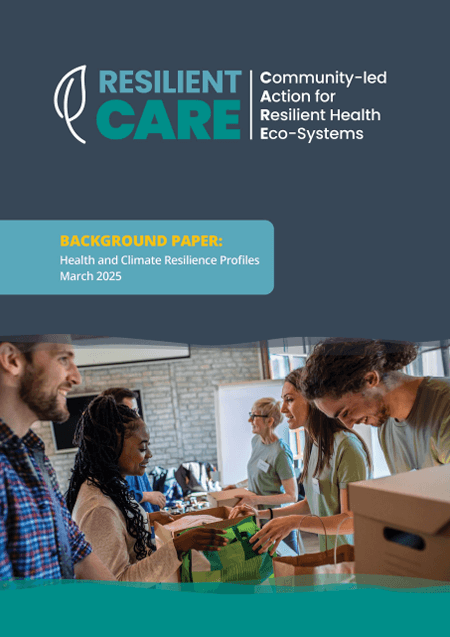
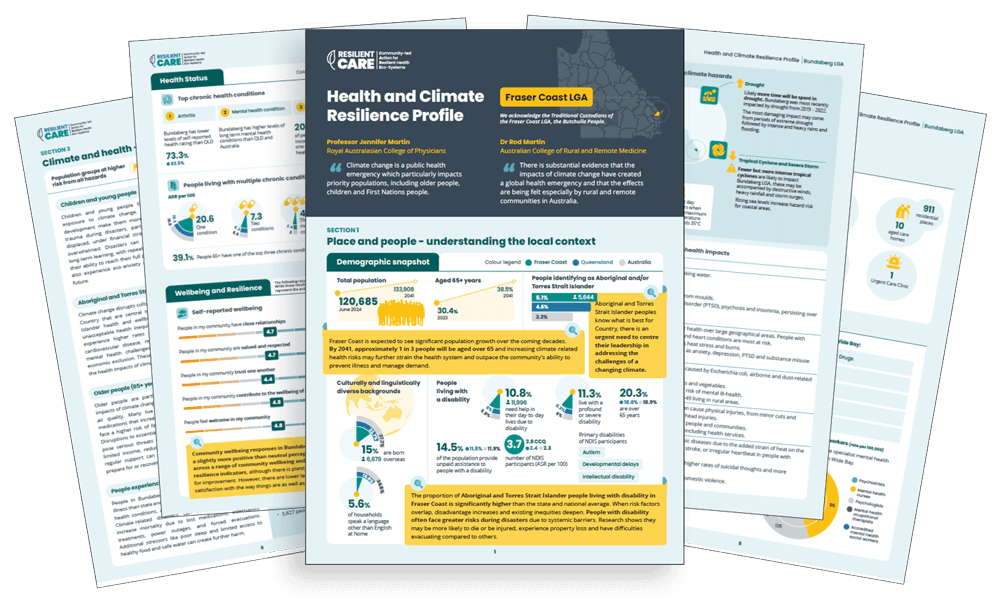
Health & Climate Resilience Profiles (HCRPs) are practical tools that combine climate and health data with local knowledge and lived experience. They show how climate extremes affect health and wellbeing, who may be most at risk, and where resilience can be strengthened.
Community Resources
Download the Profile and Compendium for your LGA
Each local government area has its own bundle with tailored resources, including:
- The Health & Climate Resilience Profile
- The Reference Compendium
Choose your local government area below to download the complete package and explore the insights that matter most to your community.
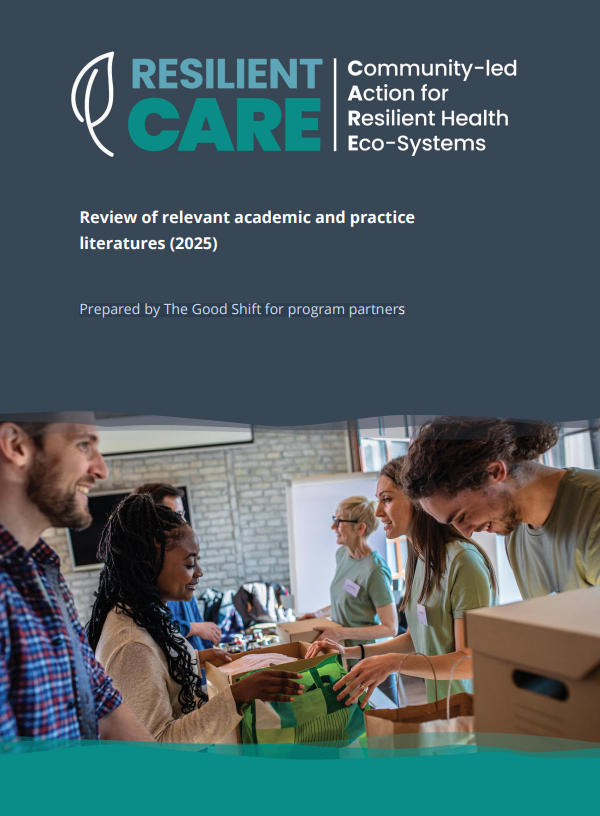
Review of Academic and Practice Literatures (2025)
Prepared by The Good Shift for program partners
As an action learning program, the Resilient CARE Literature Review was intentionally designed to be clear, accessible and easy to reference throughout implementation. It is being shared so others can draw on this resource, which brings together evidence on the intersection of health, climate impacts, disaster and community resilience, with a strong focus on equity.
User Guide
Learn how to use your Profile to plan inclusive and effective climate–health responses.
What HCRPs are and how they are designed
HCRPs bring together climate and health data with community knowledge to reveal how risks and resilience intersect. They are based on best-practice Climate and Health Vulnerability Assessment (CHVA) methods, adapted to reflect local stories, values, and needs.
Each Profile includes:
- Place and people: demographic, health, and social context
- Local climate story: current conditions and future projections
- Climate and health: what is at stake and who is most affected
- Health system capacity: current pressures and potential gaps
How to use a Profile
Follow these steps to put an HCRP into practice.
- Start with your context – consider your community or organisation and its challenges.
- Open your local HCRP – scan for strengths, gaps, and priority risks.
- Reflect on your work – map insights to your programs, services, or activities.
- Connect and share – discuss findings with peers, communities, and partners.
- Find opportunities – align efforts, fill gaps, and build cross-sector partnerships.
Where the data comes from and what to keep in mind
Data is carefully selected, but not everything can be captured.
The data prioritises:
- Direct links between climate and health risks
- Consistency across regions
- Key risk factors for health outcomes
- Transparency and traceability to original sources
Some areas such as social capital, lived experience, and local resilience indicators are not consistently available. Profiles are snapshots in time, designed to highlight the most material and measurable factors to guide local action.
Why language matters in resilience planning
HCRPs use inclusive language that recognises both risks and strengths.
Terms like “vulnerable groups” can suggest deficits in people, when risks often stem from systemic issues such as exclusion, underinvestment, or colonisation. HCRPs instead focus on exposure, sensitivity, and capacity for resilience. They use language that acknowledges challenges while recognising community strengths, for example:
- People and communities more likely to be affected by climate-health events
- Communities or settings with higher exposure or fewer supports to respond and recover
- Population groups where inequities or systemic barriers increase risk
- People who may need tailored or additional supports to build resilience
Tips for printing and accessibility
- Best printed at A3 size for readability
- Use digital viewing for zoom and navigation
- Share insights with partners to support coordinated action
Connecting with Resilient Care
Resilient CARE supports collaboration and shared learning to strengthen climate–health resilience. To get involved, get in contact with your local Resilient CARE Coordinator.
Acknowledgement:

ClimateWell and Safer Future
We gratefully acknowledge the developers of these resources, contributing partners ClimateWell and Safer Future consortia, as well as the many people across our region who provided their stories, insights and input.